


There is a conversation that keeps coming up.
Not in one city or one market — but across the rooms where developers, investors and operators are making decisions about where capital goes next. The language changes depending on who is in the room. But the question underneath is always the same.
What is this asset, really?
Is it a hotel that happens to have residences attached? Is it a members club that happens to have hotel rooms? Is it a real estate play that uses hospitality as the brand layer? The answer — increasingly — is that the distinction no longer holds. The hotel is no longer the business. It is the proof of concept. The thing that justifies the residential pricing, anchors the membership, creates the sense of place that makes everything around it more valuable.
That convergence is what Edition Insider is built to track. Not the announcements — there are enough publications covering those. The underlying structure. The deals that signal where institutional capital is repositioning. The operators building platforms rather than properties. The markets being quietly repriced before the consensus catches up.
This is the first issue. Each one builds from here.
— Nicholas
In this issue:
Private Access — off-market hotels, development sites, and strategic opportunities not in public circulation.
The Deal — Kempinski acquires Augustine Prague, Reuben Brothers move on Worth Avenue, L Catterton and Cedar Capital target 10–15 European luxury hotels, 1 Hotel Mayfair delivers, and St. Regis Residences Miami advances.
The Soho House Model — what happens to a brand built on selectivity when it scales to 50 houses, and why Tokyo is the test case that matters.
Nature-Led Hospitality — why Adrian Zecha’s return in Japan signals the institutionalisation of a category, and where the value separation is beginning to occur.
Branded Residences — how Amangiri’s first private residence illustrates the model in its most defensible form, and what makes most branded residence projects structurally weak by comparison.
The Lifestyle Residential Shift — Mr. C in Boca Raton and what it signals about the convergence of hospitality and everyday living.
The Middle East Advantage — why the region isn’t just building faster, it’s positioning faster, and what that means for capital allocation elsewhere.
Private Access
Opportunities shared selectively with Edition Insider subscribers. Not in public circulation.
Beachfront Boutique Hotel — Mykonos, Greece ~40 keys · Beachfront · 5-star operational · Recent €3M renovation Current ADR ~€600 · Clear path to €1,000+ with unified operator. What makes this rare: Mykonos has effectively halted new beachfront hotel development. This asset class is structurally finite.
Boutique Hotel — Nice, French Riviera 90 keys · Supply-constrained submarket · Repositioning opportunity. What makes this rare: Strong underlying demand in a fragmented ownership landscape. Value creation through operational uplift, not development risk.
Ultra-Luxury Hotel & Branded Residential Site — Downtown New York Early stage · Hospitality anchor + residential value driver structure. What makes this rare: One of the few remaining opportunities to build at the top end of the Manhattan market with brand alignment from day one.
Fully Entitled Hospitality Site — West Hollywood, Los Angeles ~45,000 SF · Development-ready · Entitlements secured. What makes this rare: In Los Angeles, entitlement friction is the primary constraint. This asset removes that variable entirely.
Strategic Role — Northeast US Hotel Acquisitions Founder-led hospitality group · Michelin-recognised Hudson Valley property Seeking: Hotel Acquisitions Lead across Northeast, Mid-Atlantic, and South. What this requires: A real network of owners, brokers, and developers you can activate. Instinct over process.
To enquire privately or feature an opportunity: insider@edition-x.com
The Deal
Five transactions worth understanding — and what they signal.
Kempinski acquires Augustine Hotel, Prague First direct acquisition in over 50 years · Heritage asset · Full operational control
The signal: At the ultra-luxury end, asset-light is no longer enough. Brand alone cannot deliver a truly differentiated product — ownership, or at least control, increasingly can.
Reuben Brothers & Crown Onyx acquire Esplanade on Worth Avenue, Palm Beach ~$200M · ~$1,553 PSF · Nearly double the 2014 trade
The signal: This is not a single acquisition. It is placemaking at market level — the group is assembling retail, hospitality, and social infrastructure across Palm Beach into a single ecosystem. Watch the broader accumulation strategy, not just this deal.
L Catterton + Cedar Capital joint venture — 10–15 luxury hotels, Europe & North America Backed by LVMH · Consumer insight meets real estate execution
The signal: Luxury hospitality is not a brand play alone. It requires operational depth and asset-level expertise. This structure acknowledges that explicitly.
Starwood Capital delivers 1 Hotel Mayfair, London £200M+ · ADR £800–£1,200 · Targets younger, design-led customer below legacy ultra-luxury pricing
The signal: This is platform validation, not a single asset play. If 1 Hotels achieves consistent premium pricing across gateway cities, it becomes a scalable operating platform with residential extension potential.
Brookfield & Related Group advance St. Regis Residences Miami 350+ units · Two towers · Pricing $2M–$20M+ · Ultra-prime positioning
The signal: Miami has become a full-time global wealth market. If this absorbs at scale, it confirms that branded residences are now the default structure for luxury development in gateway cities. The risk is delivering at this volume without diluting the premium.
This Week’s Intelligence
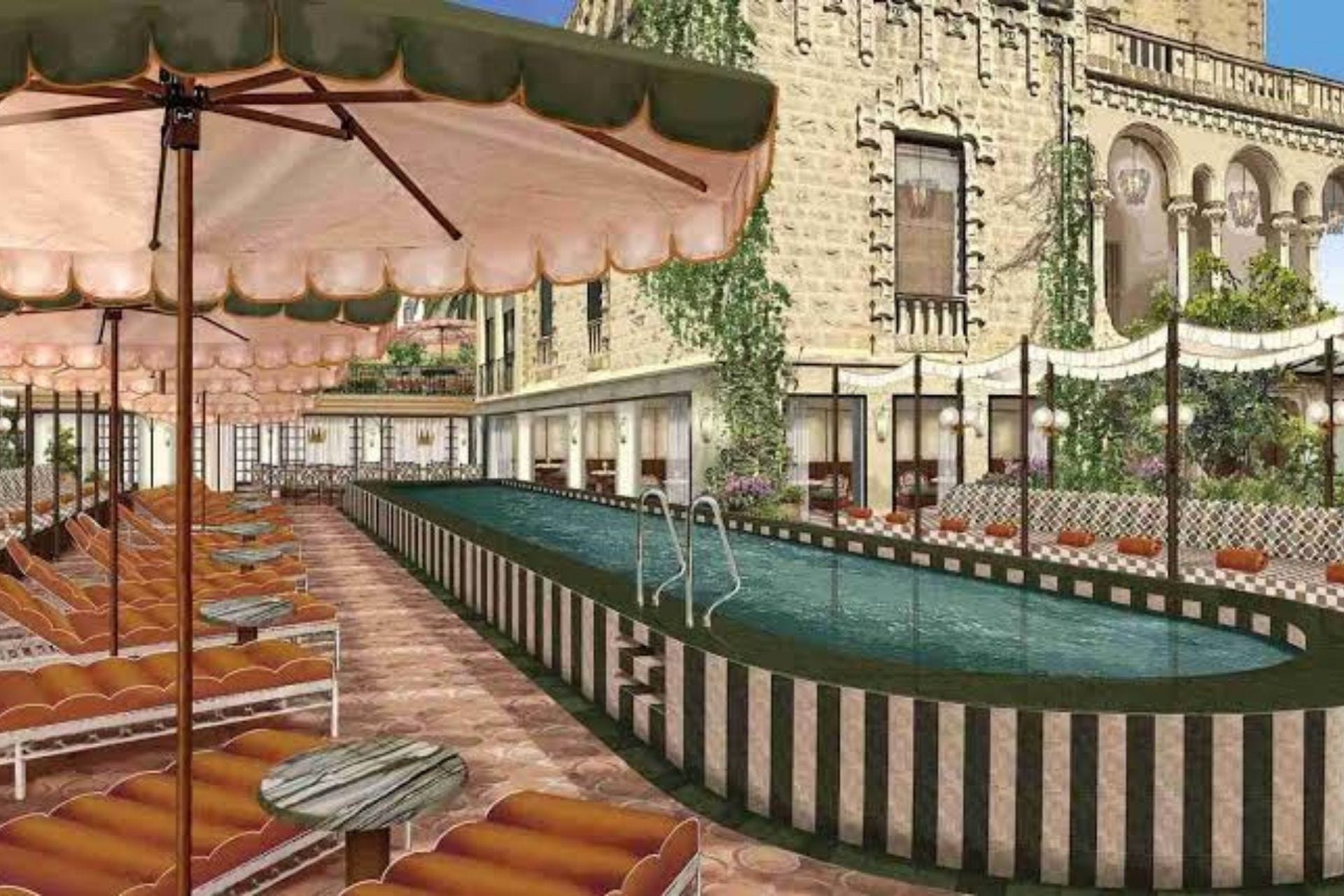
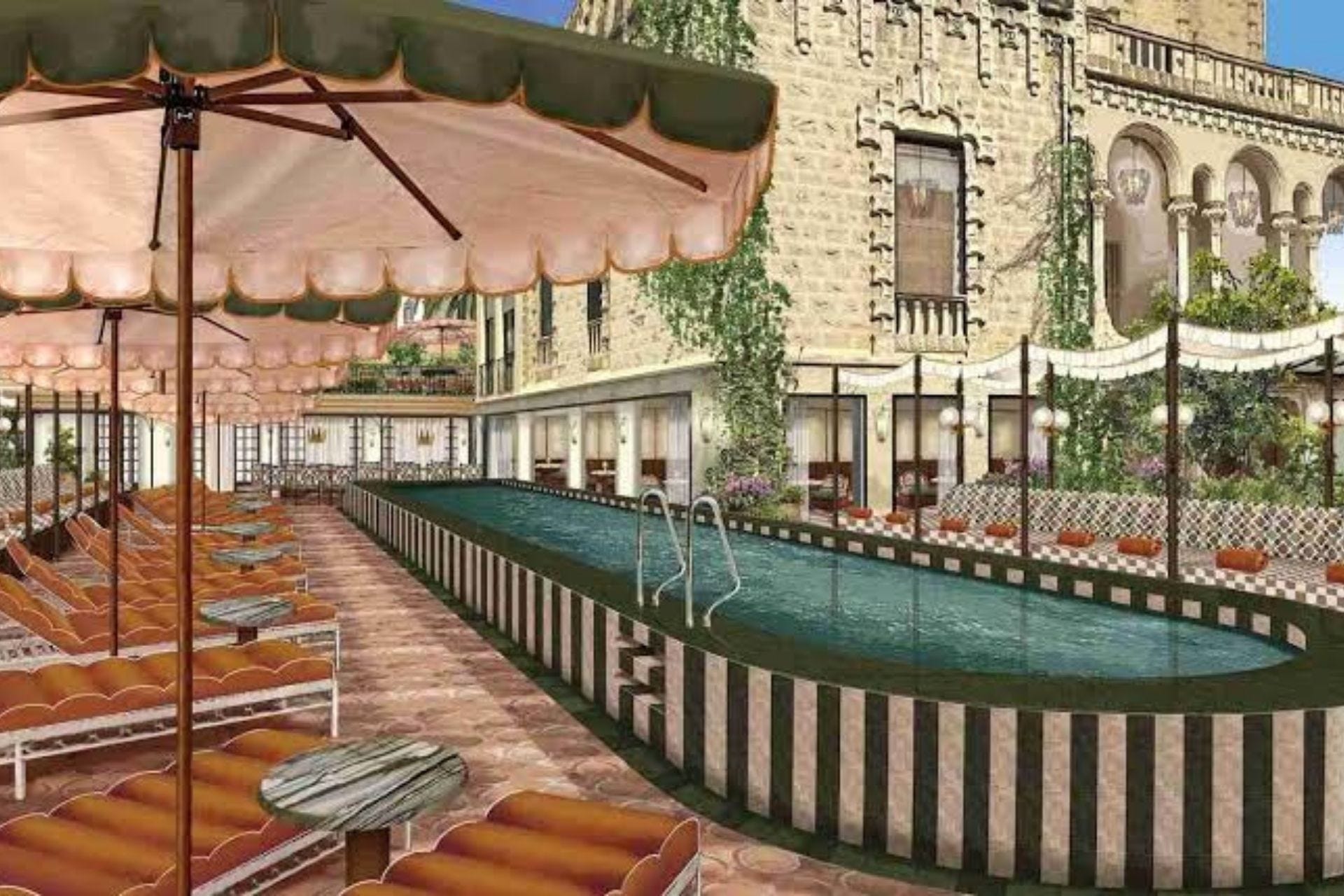
Soho House Tokyo — selectivity at scale
01 — The Soho House model: what happens when selectivity scales
Soho House succeeded because it understood something most hospitality brands don’t — that the value was never in the design. It was in the boundary. Membership created a social perimeter. Location created context. Together they produced something far more durable than a well-designed room: a sense of belonging tied to a specific place, at a specific moment in time.
The opening of Soho House Tokyo, the brand’s 50th house, is worth examining closely — not because it is the most important opening of the year, but because it is the most revealing test of whether that original logic still holds at scale.
Set across four floors in Omotesando, the space is carefully inflected with local specificity — kimono fabrics, sakiori weaving, bespoke Japanese furnishings. Even the rooftop pool, a genuine rarity in Tokyo’s dense urban fabric, carries meaning beyond amenity. It is a reflection of constraint, and constraint is what gives things value. Membership is priced at ¥620,000. It is not designed for everyone, and that remains the point.
Tokyo works because the original conditions are intact. But elsewhere, the model is being replicated without those conditions. The result is a proliferation of spaces that look right but feel interchangeable — design without boundary, atmosphere without identity. As the category standardises, pricing power erodes. Without a clear social or physical perimeter, these environments compete on novelty rather than meaning. They become easy to replace.
The contrast is instructive. Aman Venice commands $2,500–$4,000 nightly not because of service levels alone, but because of what cannot be reproduced: location, history, and controlled access. That is a different category of asset — defined not by how it looks, but by what it limits.
The next phase of lifestyle hospitality will not be decided by how widely the Soho House model spreads. It will be decided by how carefully it is held together. Scale is no longer the challenge. Identity is.
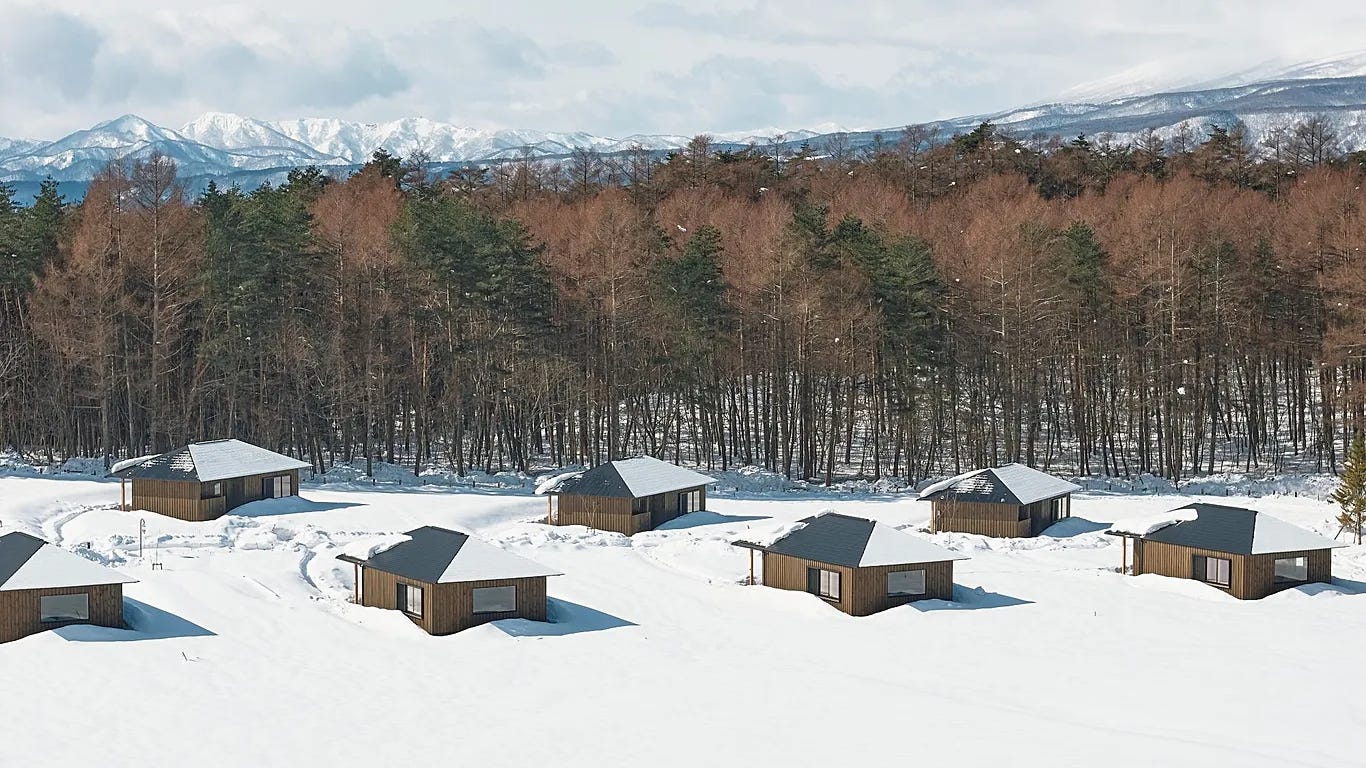
Azuma Farm Koiwai — land as the asset
02 — Nature-led hospitality: where the value separation is beginning to occur
Nature-led hospitality is routinely described as a post-pandemic shift. That framing is directionally correct but analytically insufficient. What is actually happening is the institutionalisation of a category — and the separation of assets within it between those that will hold value and those that will not.
Adrian Zecha established the foundational logic with Amanpuri in 1988: architecture, service, and landscape operating as a single system, where the land itself is the experience. He has now returned to that principle in a different context.
Azuma Farm Koiwai, opening in Iwate Prefecture, sits within the grounds of Koiwai Farm beneath Mount Iwate — a landscape regenerated over more than a century from volcanic ash into one of Japan’s most biodiverse rural environments. The project comprises 24 villas across eight hectares of woodland, designed by Shiro Miura using timber sourced directly from the land. Programming is embedded in the environment — food drawn from the farm’s dairy herds and the Sanriku coast, cultural experiences connecting guests to an 11th-generation Nanbu ironware master in nearby Morioka. Rooms begin at approximately ¥200,000 per night.
What defines Azuma Farm is not its aesthetic. It is its level of integration. This is not a resort placed within nature. It is a property that cannot exist anywhere else.
That distinction is where the investment thesis becomes clear. As the category scales, more projects adopt the visual language of nature — timber, minimalism, landscape integration — but far fewer are anchored in what actually creates durable value: land with genuine history, environmental constraint, and cultural specificity that cannot be manufactured elsewhere.
Nature-led assets that are loosely contextual will compete on aesthetics and erode on price. Those that are geographically constrained and culturally embedded will compete on scarcity. Over time, scarcity — not design — is what sustains pricing power. The divergence between these two types of asset is only beginning.
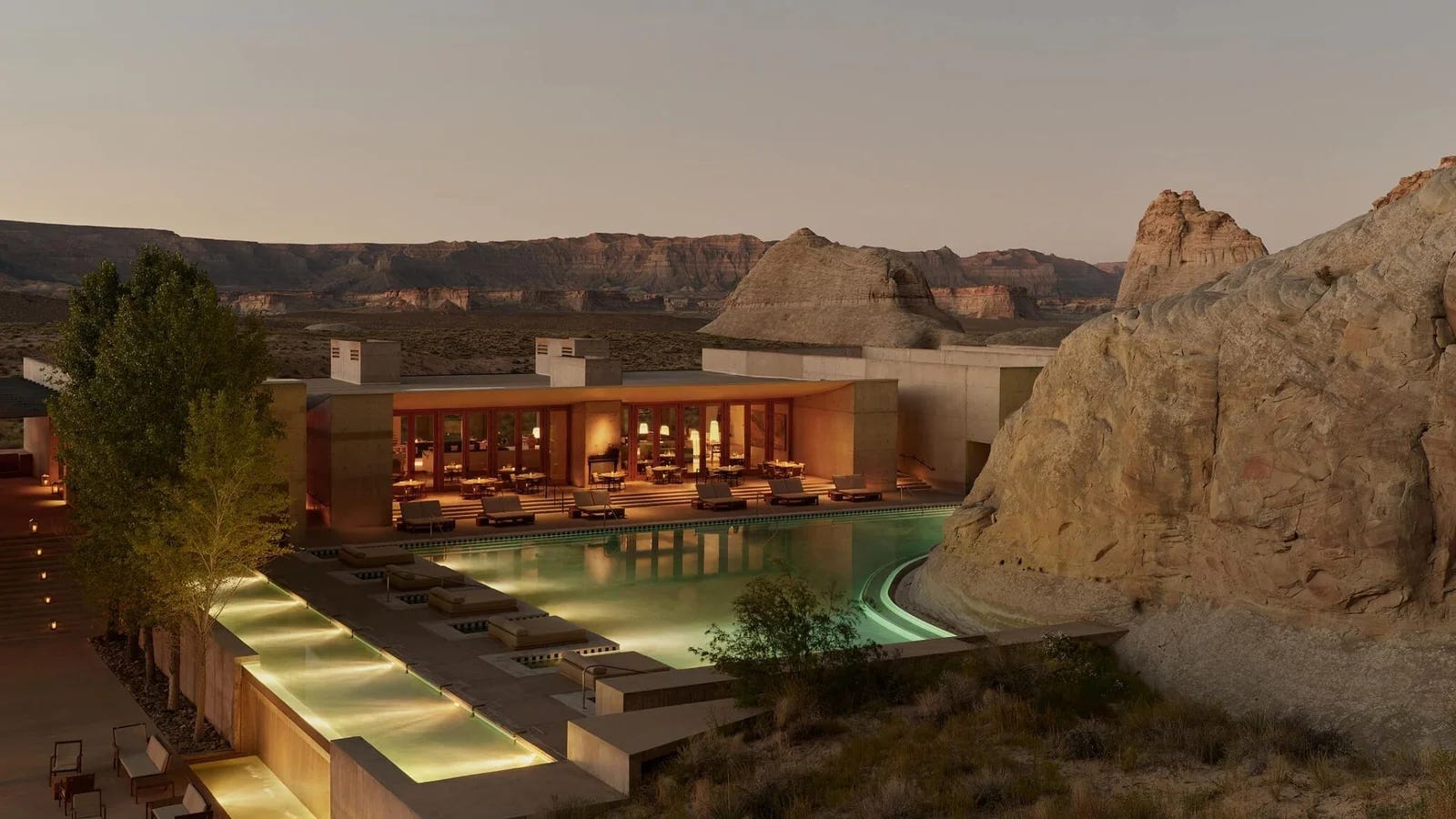
Amangiri — from stay to ownership
03 — Branded residences: the hotel as capital structure
It is now difficult to find a serious luxury hospitality project that does not include a residential component. The reason is not cultural. It is financial.
Branded residences allow developers to realise value earlier in the asset lifecycle, reduce dependence on long-term operating performance, and anchor pricing through association with a recognised brand. In many cases the hotel is no longer the primary profit centre. It has become the mechanism — the proof of concept that justifies the residential premium sitting beside or above it.
Amangiri illustrates how far this model has evolved in its most defensible form. Originally conceived as a 34-suite resort embedded into the red rock landscape of southern Utah, it has spent over a decade establishing a specific and irreplaceable standard — architecture, service, and landscape in complete alignment.
The first privately owned residence within the Amangiri perimeter has now entered the market at $33,000,000. A nine-acre estate spanning nearly 12,000 square feet, six bedrooms arranged around interior courtyards, a 118-foot pool carved directly into the rock. Designed by Marwan Al-Sayed of Masastudio — one of the original architects of the resort — the residence reads not as an addition but as a continuation of the original asset.
That distinction matters. Across the wider development, only 12 private homes will be delivered across 900 acres of protected desert. Plots range from five to 19 acres. No two are identical. Owners receive access to the resort’s spa, dining, and services — but more critically, they secure permanent access to land and a point of view that cannot be replicated or expanded.
This is what separates a defensible branded residence from one that will struggle to hold its premium as supply increases. Three conditions must align: irreplaceable real estate, a clear architectural and cultural point of view, and a service layer that extends meaningfully beyond the stay. Remove any one of them and the premium becomes difficult to sustain.
As the category expands, most branded residence projects will not meet that standard. The ones that do will become increasingly rare — and increasingly valuable for exactly that reason.
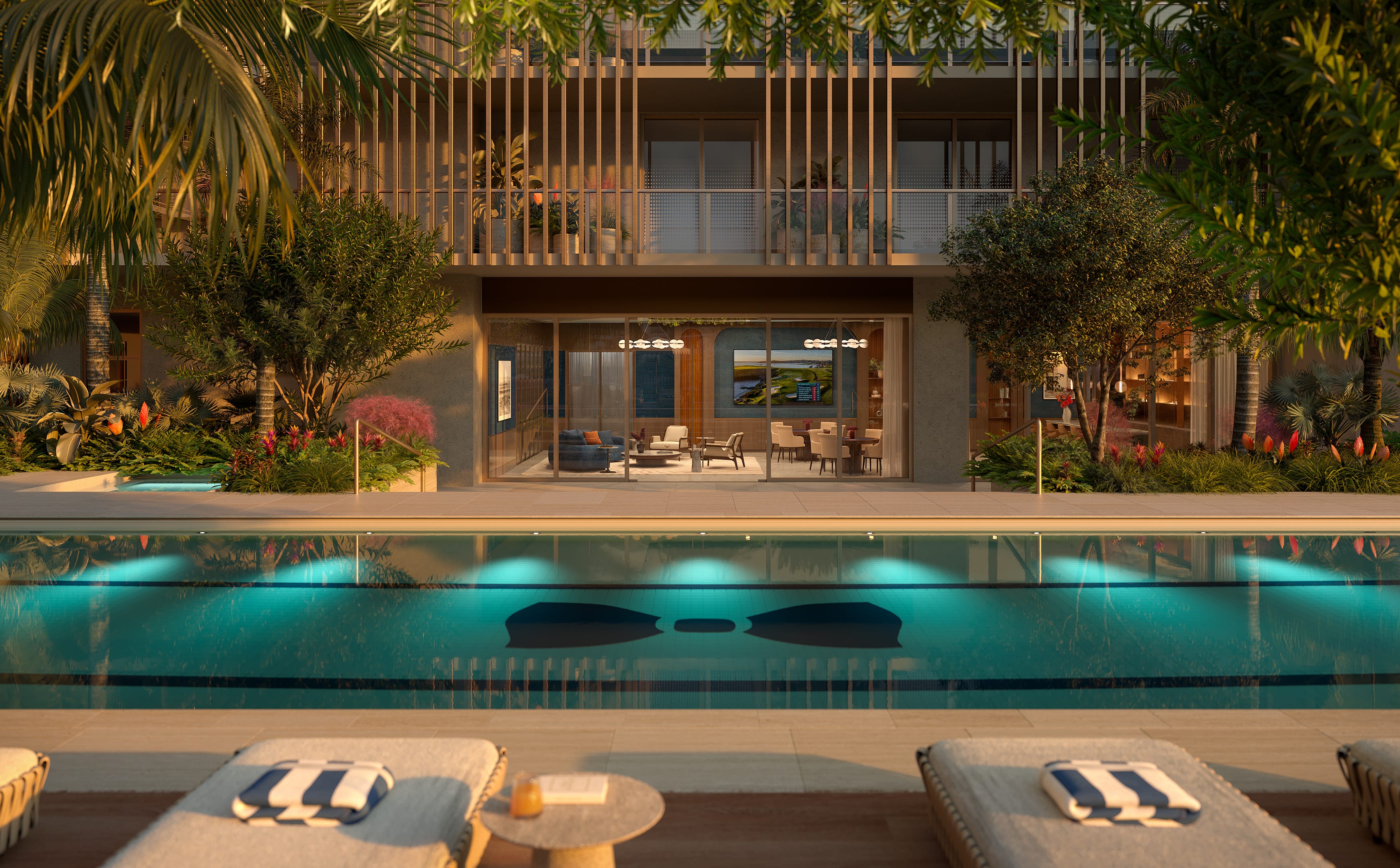
Mr. C Boca Raton — hospitality as infrastructure
04 — The lifestyle residential shift: when the hotel becomes the operating system
Mr. C is not building a hotel in Boca Raton. It is building an operating system for how people live.
The project comprises 133 residences priced from approximately $1.95 million to $8.5 million. On the surface it sits within the South Florida luxury market. In terms of its underlying model it sits somewhere more interesting — at the point where hospitality stops being a destination and becomes infrastructure.
Structured around walkability, integrated food and beverage, and continuous hospitality-led services, the project treats these not as amenities but as the core product. The experience is designed to operate as part of daily life, not as an occasional elevated moment during a stay.
This reflects a structural shift in buyer behaviour that is now becoming visible across multiple markets. The second home buyer is no longer primarily seeking escape. They are seeking continuity — a consistent standard of environment, service, and social context that follows them rather than requiring travel to access. The question they are asking is not where can I go, but where can I live this way permanently.
This is where the model diverges from traditional residential real estate. Value is no longer determined solely by location, specification, or views. It is determined by how effectively the property functions as a lifestyle platform — one that delivers service, convenience, and a curated social environment as standard.
As this expectation becomes more widespread, the boundary between hospitality and residential will continue to dissolve. What emerges in its place is a category where real estate is underwritten not on what it is, but on how it operates. That shift has significant implications for how these assets are developed, positioned, priced, and held.
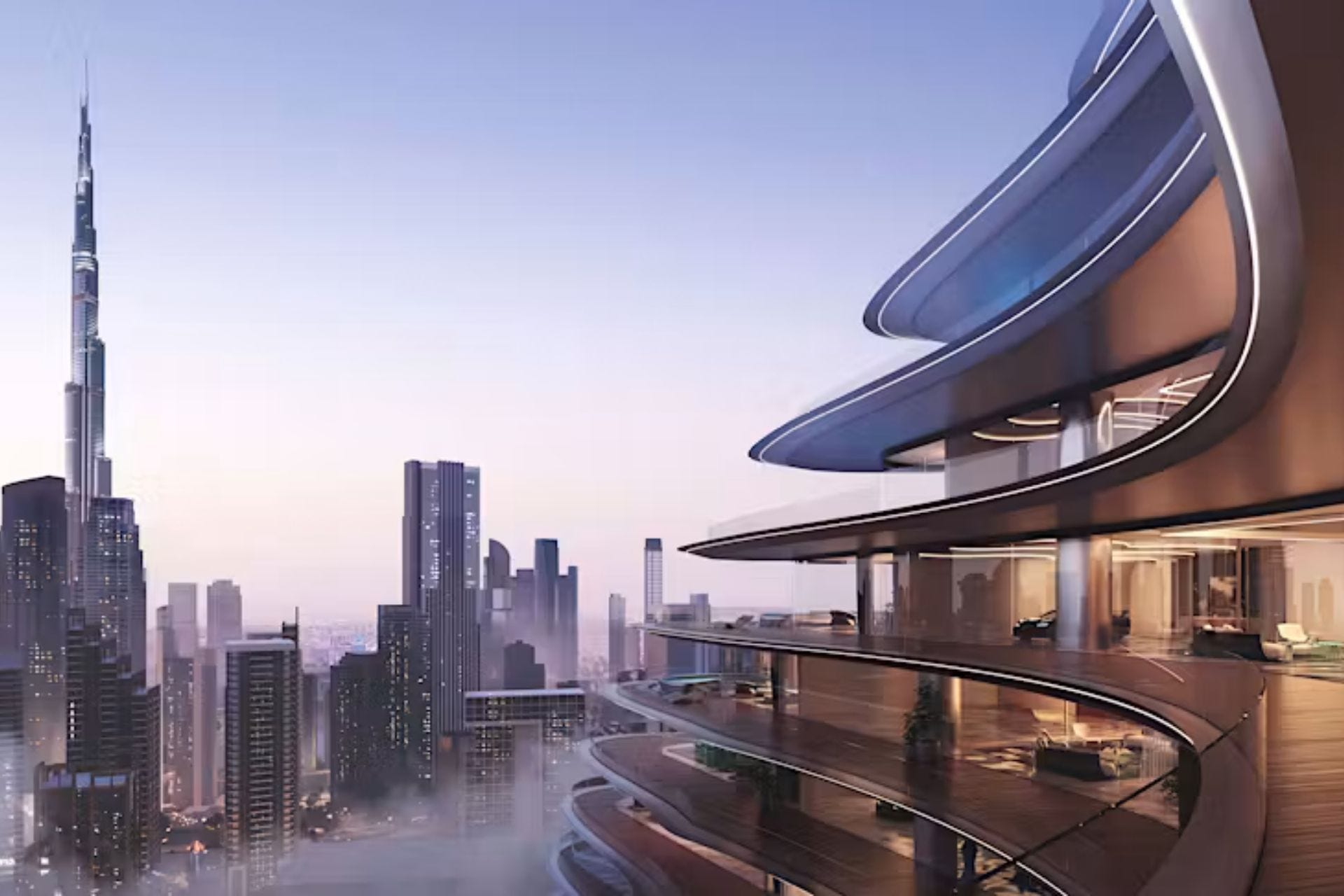
Bugatti Residences Dubai — positioning faster
05 — The Middle East advantage: why speed has become a structural edge
The rate at which Dubai and the broader Middle East are delivering branded hospitality and residential product continues to outpace Western markets — and the common explanation, that capital is simply more available, misses what is actually driving it.
The real advantage is coordination.
Across the region, development operates within a tightly aligned system where capital, planning approvals, and execution move as a single framework rather than as sequential, fragmented processes. Land is controlled. Timelines are structured with a level of certainty that most Western development environments cannot replicate. The result is that projects move from concept to market at a speed that changes the economics fundamentally.
This matters for a specific reason. In luxury hospitality and branded residential, narrative is not a marketing function — it is a value driver. The ability to deliver product, brand story, and market visibility in rapid succession allows these markets to capture disproportionate global attention. And attention, at this end of the market, converts directly into capital allocation.
Buyers in these markets are not simply purchasing real estate. They are buying into a story that is already in motion — one supported by infrastructure, brand relationships, and a broader ecosystem that reinforces the value of the individual asset.
That dynamic is structurally difficult to replicate in markets where planning is fragmented, delivery timelines are uncertain, and brand narrative tends to emerge after the fact rather than being built in from the outset.
The Middle East is not simply building faster. It is compressing the distance between idea and market — and in a category where timing and momentum shape perception, that compression is becoming a durable competitive advantage.
That’s it for No. 001. More next week.
— Nicholas
Thanks for reading EDITION Insider! Subscribe for free to receive new posts and support my work.